The design behind the design
April 2, 2013After spending a good part of my young adult life fishing northern Minnesota - mostly the Alexandria and Perham areas - I had a pretty good idea of what I wanted to show with my tables. The hard part was how to make them look as real as possible.
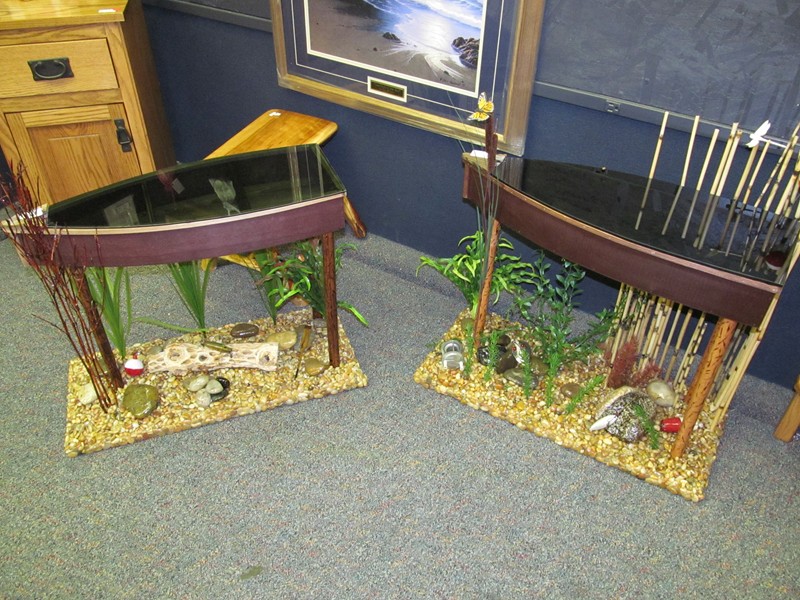
After going over multiple scenarios, I decided to go back to the beginning and try to kick start my artistic vision. On the crappie table (which features a one and a half pound crappie in the table that i caught in Perham) the ideas were flowing faster than i could keep up with. That's when you start going through your memory bank: What did the water look like? Were there rocks, sand, weeds? Can I even come close to replicating the environment on a wood base?
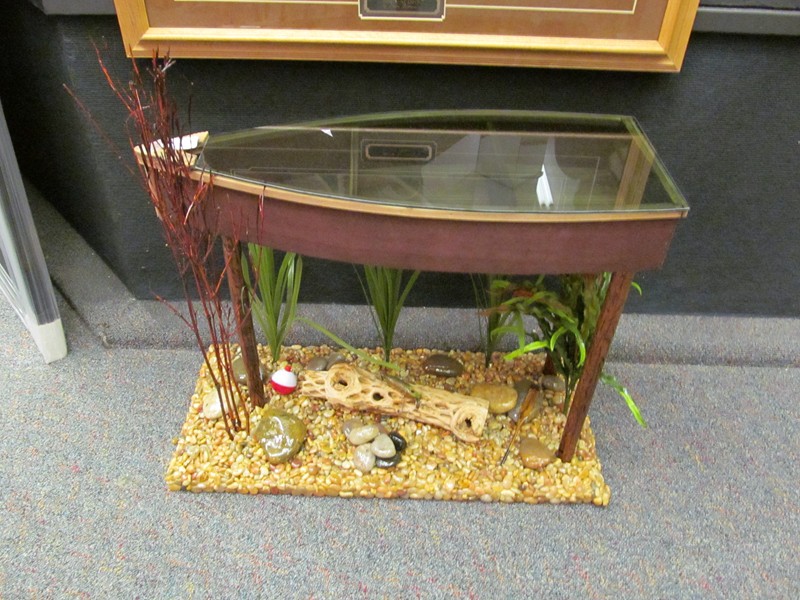
The answer all around was yes. Crappies, depending on the time of year, travel between the deep open waters to the weed filled shallows. I decided to pick the spring trend just because a tables looks much better with the shallow structure versus deep open water.
So like a painter on a canvas, I started adding my structure
and realized that there is no wrong structure\. Fish will be
attracted to any type of structure. Once I stopped over
thinking the table build moved ahead quickly.
I kept that table for personal use and started making plain water scene tables, tables with docks and then tables with fish. Then, one day I got an email from a lady in Maine who was following my table builds and she asked me if I could make a table for her boyfriend, who was a lobster fisherman.
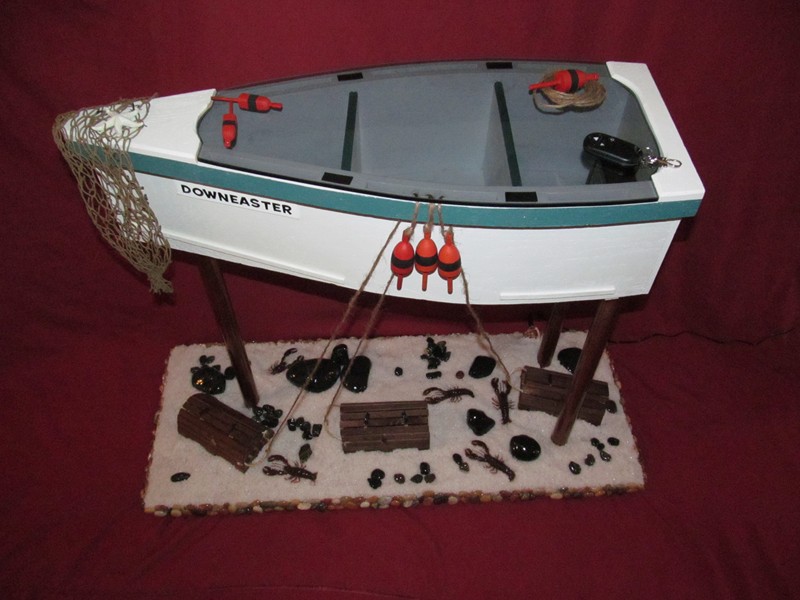
The idea of this paralyzed me in the beginning. I felt like I was just getting freshwater scenery down and now I would have to figure out what a lobster may see on the bottom of the ocean. This brought on a whole bunch of different challenges: What does a lobster's environment look like? Are there different types of lobsters? What is the bottom structure? What about traps, ropes, buoys?
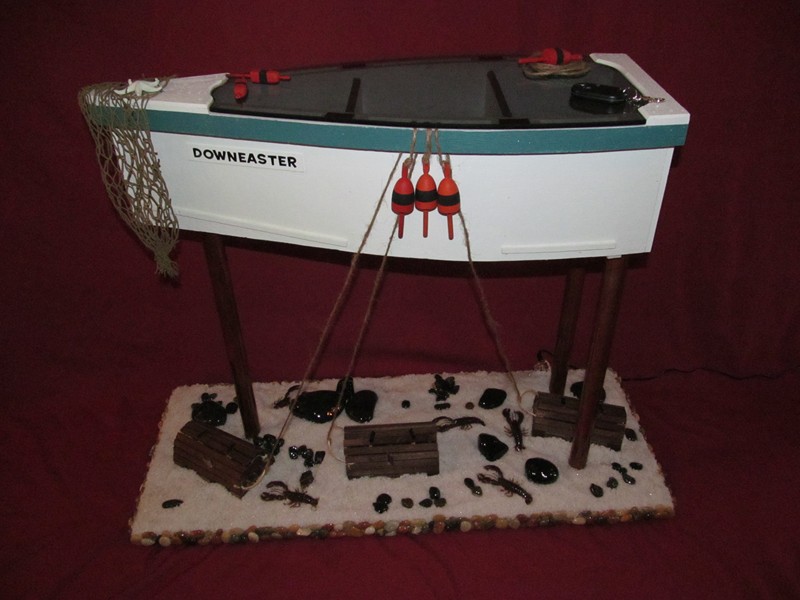
This was a lot to consume for a Minnesota born and raised boy. I had to take a step back and really do my home work. With the help of the internet and the customer it turned out pretty good. Thank God for Google: 48 different types of lobsters; many different colors, including blue-green, blue and red; and different bottom structures including sands, rocks and weeds.
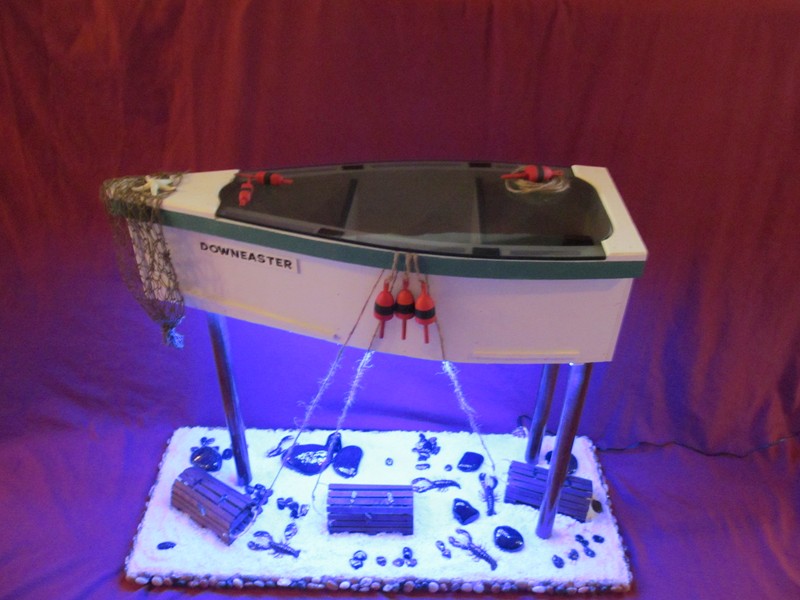
Where this so called talent came from I still do not know, I guess the big guy upstairs decided to bring it out now.
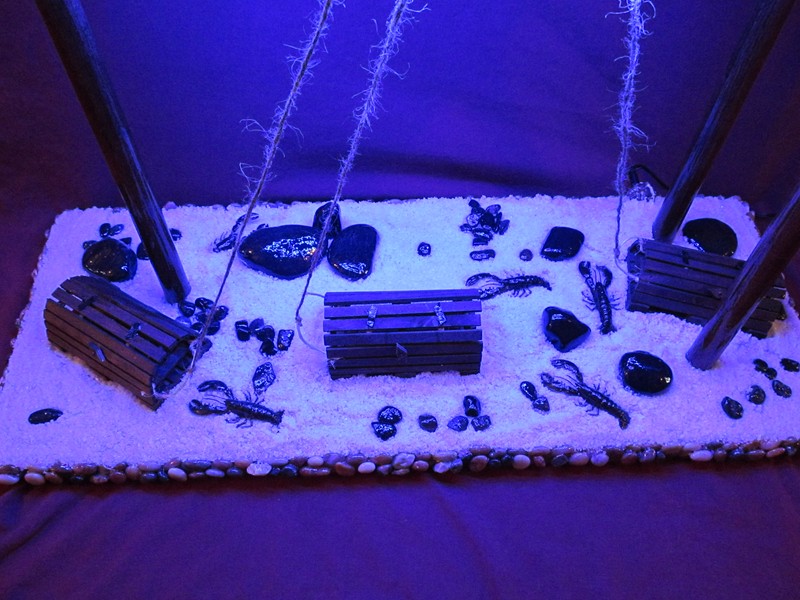
Posted by Don Erickson. Posted In : Outdoors art

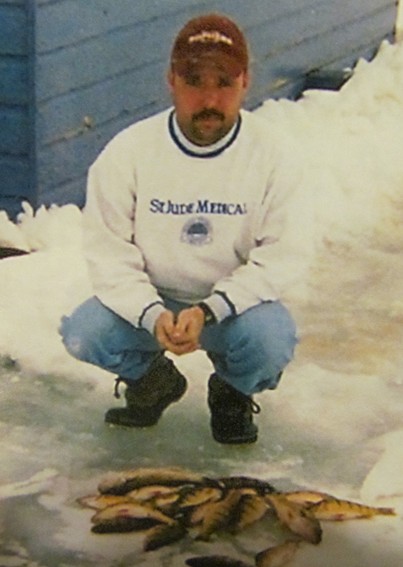 Don Erickson, 47, of Lakeville, Minn., started www.dderickson.com several years ago to advertise and sell his custom made furniture featuring trophy fish, collectibles from a vacation, shells, rocks, sand, driftwood or anything you would like to preserve in a table. All tables are made custom to order. He has two sons, 24 and 21, with his wife of 25 years. He is also an avid fisherman and fishing collector.
